
Do they use Christmas trees in Japan
East Meets Festivity: Do They Use Christmas Trees in Japan?
🎄 From Mega Illilluminations to Micro-Apartments: The Unique World of Japanese Holiday Evergreens 🎄
When you think of December in Japan, your mind might instantly drift to traditional steaming bowls of ramen, snow-capped temples in Kyoto, or preparation for the massive New Year (*Oshogatsu*) shrines visits. Because less than 1% of the population identifies as Christian, it is easy to assume that Western winter staples disappear entirely at the border.
But walk into central Tokyo, Osaka, or Yokohama mid-November, and you will be greeted by one of the most blindingly beautiful, over-the-top holiday displays on earth. This leaves many travelers asking a simple question: Do they actually use Christmas trees in Japan?
The short answer is **yes, absolutely—but with a fascinating cultural twist.** Japan has completely embraced the aesthetic joy of the Christmas tree, modifying it to fit their unique spatial lifestyle and modern secular traditions.
1. The Public Mega-Trees & "Winter Illuminations"
While Christmas is not a public national holiday in Japan, it is treated as a spectacular **commercial romance festival and visual celebration**. Shopping districts like Ginza, Roppongi Hills, and Tokyo Midtown engage in fierce annual competitions to see who can build the most breathtaking public tree.
These are rarely your standard green rustic firs. Japanese public Christmas trees signify high-tech futuristic art installations. They are frequently made entirely of geometric glass panels, dynamic color-changing LED crystals, or hundreds of stacked traditional lanterns. Combined with massive city-wide light shows called *Winter Illuminations*, Japan transforms public trees into epic urban landmarks.
2. The "Micro-Tree" Reality in Japanese Homes
Inside the residential sphere, the story shifts dramatically. Because traditional urban Japanese apartments prioritize **minimalism, clean space, and sleek storage**, dragging a giant 7-foot real pine tree into the living room is practically out of the question.
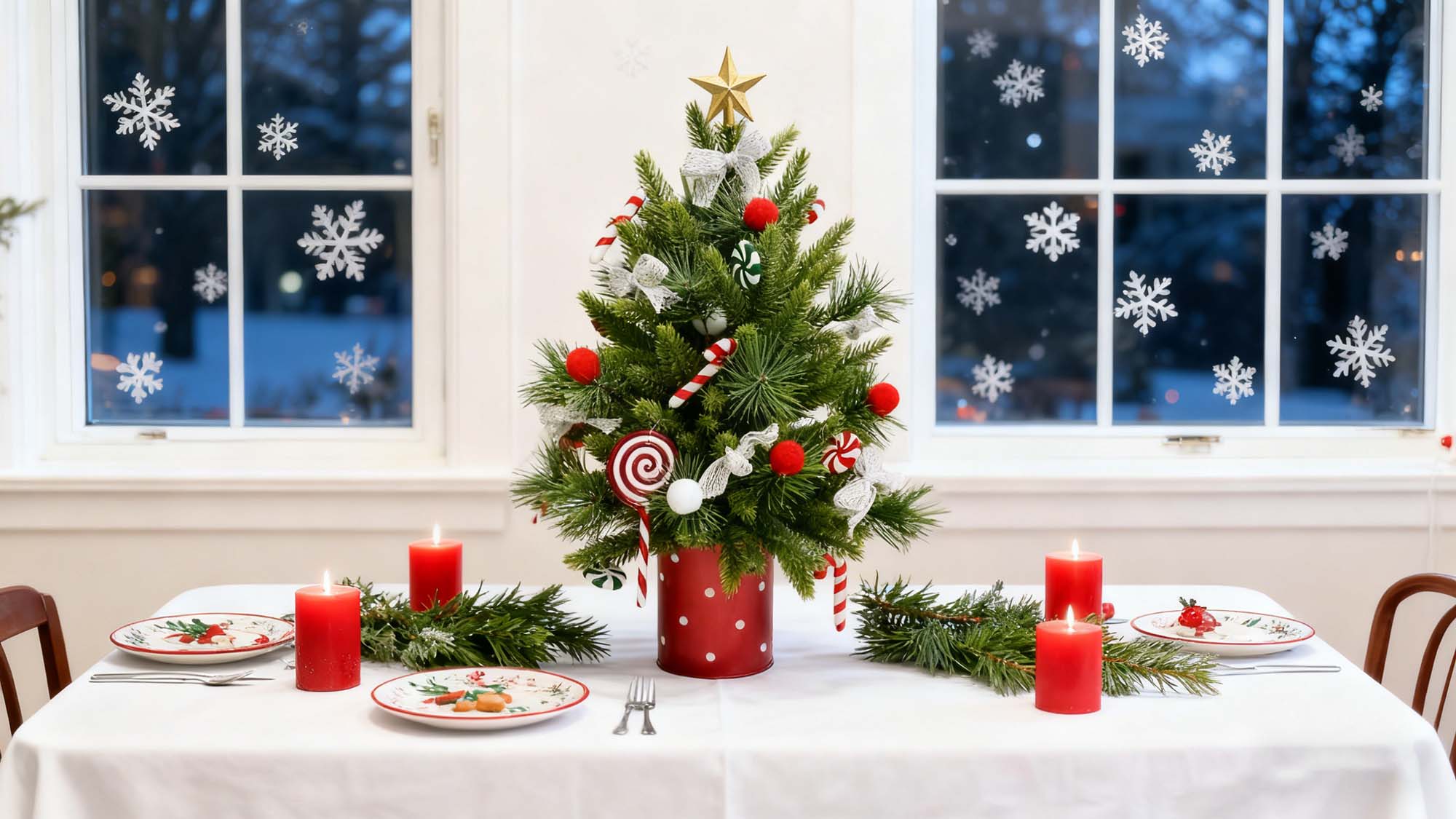
Instead, Japanese households are the undisputed masters of the "Micro Christmas Tree." Walk into a Tokyo home goods store like *Muji* or *Loft*, and you will find highly curated tables of desktop faux trees, tabletop wooden geometric fold-out trees, and delicate silhouette wall-hangings. It allows families to celebrate the cozy texture of the holidays without cluttering their living zones.
How the Tree Traditions Differ:
- Origami and Local Flair: Instead of heavy vintage heirloom nutcrackers, many residential Japanese trees are adorned with beautifully folded gold origami cranes, tiny hand-painted fans, and sleek minimalist LED strip lights.
- The New Year Swap out: Unlike Western homes where the tree lingers well past January 1st, Japan operates on a strict timeline. Christmas trees vanish instantly on the night of December 25th, replaced by traditional pine-and-bamboo *Kadomatsu* displays to welcome the Shinto deities for the New Year.
- Faux Over Fresh: Due to a lack of local fir farms, real cut trees are an expensive luxury import. Virtually 99% of residential trees in Japan are sleek, high-quality, pre-lit artificial designs.
The Final Verdict
Japan does not just "use" Christmas trees; they have elevated them into an **architectural art form**. Whether it is a multi-story synchronized light installation in Shinjuku or a single, beautifully folded wooden tabletop tree in an urban apartment, the spirit of the evergreen is alive and thriving across the country.
Related Article